
A local landmark which has experienced many lives in its nearly 100 years of existance is being transformed once again.
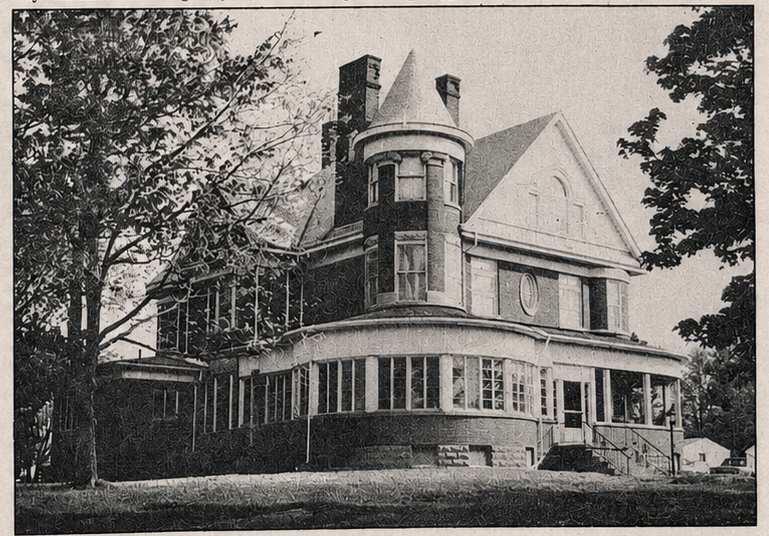
The rambling house on the corner of Jackson and Dieker streets, nicknamed The Castle, will be the new home of McCullough Realty come Monday.
As Dieker Place it will serve as office space for its realtor owners Kevin Katterhenry and Curtis McCullough and professional concerns which wish to rent areas of the 12-room house.
Since April 1 crews from Kamcon, a construction firm owned by Keith Miller of St. Henry, have been remodeling the downstairs of the house. Elegant fireplaces and woodwork original to the sweeping house were stripped and refinished.
Tasteful wallpaper and burgundy carpeting throughout were selected by Sandy Hunter, a designer for Studio 3, Inc. While part of the downstairs will serve as offices for McCullough and Kamcon, there is room for other businesses.
According to Veryl Cisco, a McCullough associate, the upstairs of the house also will be used for offices.
In the past, the house had held Castle Ceramics, a business run by Homer and Pat Rice, who sold the house to McCullough. It also had been a nursing home from the late 1940s until the early 1970s.
But it was designed originally to serve as an impressive residence. However, building the house bankrupted its first two owners, according to Cisco.
William Piper was a prominent businessman when he started the house, in the late 1890s, but was forced to sell it to W. A. Dieker.
When Dieker lost his property he sold it to Kate and Thomas Bothwell, Katterhenry said. The Bothwells sold it to the Kleinhenz family, which owned a stockyards, in 1928. Kleinhenz sold it to Howell Rees in 1946, he added. In 1957, it was sold to St. Marys Nursing Home, Inc.
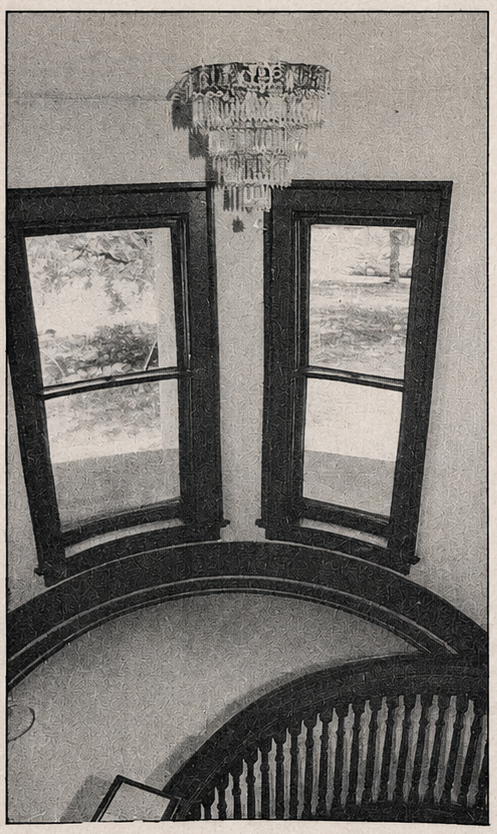
During the time it was a nursing home, some of the original fixtures were replaced by more functional ones. Wooden doors were replaced with metal ones and chandeliers were removed in favor of institutional-style lighting.
When the Rices bought the house in 1979 from Bob and Jeri Engel, they considered restoring it, according to the Rices’ daughter Pam Frank, who lived in the upstairs of the house while her parents lived downstairs.
However, the process would have been very costly and tedious because of the alterations which had been made, she said.
They did not seek to place it on the National Register of Historic Places Frank says because “pretty much any chances for that had been ruined when they put the nursing home in there. We tried tearing up the floors in one room, which had been hard-wood (in hopes of restoring them). From having been slop-mopped the floors were too water stained.”
She calls the McCullough plan for revamping the house “the best” fate that could befall the structure. “Their plan has allowed them to keep the original structure but modernize.”
Four years ago the house was nearly purchased by a local drugstore, but a problem with zoning regulations was the reasons the deal fell through, according to Frank. Had the house — which has a third floor ballroom — been sold at that time, it would have been razed.
If the house had had its historic significance preserved, her parents would not have considered the sale, she said.
During the years Frank lived in the house with her daughter Laura she was often asked if she was frightened of things that go bump in the night. “It was never an issue; maybe we’re not a superstitious family.”
But she did get a chill up her spine from time to time at the sound of the dumbwaiter travelling between floors. The remnant from the original owners came in handy, transporting groceries from the ground to her second floor home.
Because of the fire hazard the shaft posed, the realty is tearing out the dumbwaiter, Cisco said.
Some finishing touches still need to be done on the new office building — including the front porch area, which will be a plant room, landscaping and completion of the sign out front.
One reason the realty bought the house was “we outgrew where we were at (on East Spring Street) and wanted a business that could hold us,” Cisco said.
In addition, Katterhenry explained, “We wanted to invest back into St. Marys in something that had been there forever.”